
Treatment For Lateral Collateral Ligament Injury

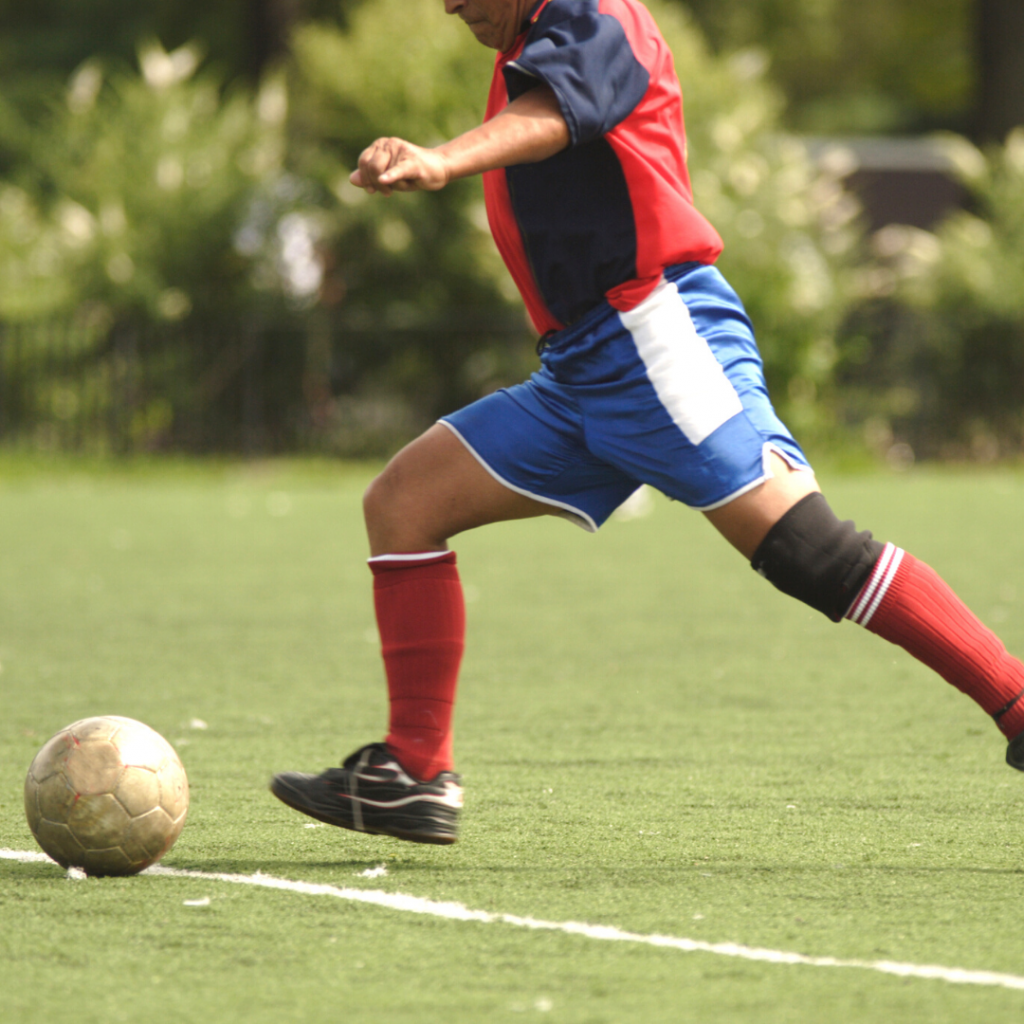
Soccer player on a field preparing to kick a ball, wearing a blue and red uniform with red socks and black cleats.
Forbes: Lionel Messi Expected To Miss 3 Weeks With Elbow Fracture: Is Barcelona Rushing Him Back?
May 20, 2021

Treatment for Lateral Collateral Ligament Injury: What You Need to Know

The lateral collateral ligament (LCL) is one of the major collateral ligaments that help stabilize your knee joint. Running along the outside of your knee, the LCL connects the femur (thigh bone) to the fibula (one of the lower leg bones). When this ligament is stretched or torn—often due to a twisting injury, sudden impact, or contact sports—you may experience significant pain and instability.

At Dines Orthopedics, our sports medicine specialists diagnose and treat a wide range of knee injuries, including lateral collateral ligament injuries, sprains, and complete LCL tears. Below is a full guide to understanding your injury and the most effective treatment options available.


What Is a Lateral Collateral Ligament (LCL) Injury?

The LCL helps keep the knee stable, preventing excessive side-to-side movement. Because it sits on the outer side of your knee, it is vulnerable to force that pushes the knee inward.

An LCL injury can range from a mild sprain to a complete tear:

  • Grade 1 (Mild Sprain): The ligament is stretched but remains intact.

  • Grade 2 (Partial Tear): The ligament is partially torn, leading to instability and pain.

  • Grade 3 (Complete Tear): The ligament is torn fully and may cause significant instability; these injuries often occur with other knee ligament damage such as the ACL, MCL, or PCL.


Signs and Symptoms of an LCL Sprain or Tear

Patients commonly report:

  • Pain on the outside of the knee

  • Swelling and tenderness along the ligament

  • Feeling that the knee “gives out”

  • Difficulty putting weight on your knee

  • Instability during movement

  • Bruising or stiffness

  • Pain when twisting or bending the knee

Because LCL injuries often occur with other collateral ligament injuries or cruciate ligament damage, a full orthopedic evaluation is essential.


How LCL Injuries Happen

Common causes include:

  • Sudden impact to the inside of the knee

  • Twisting or pivoting during sports

  • Direct blows during football, soccer, or basketball

  • Falls or work-related accidents

  • Hyperextension of the knee

  • Quick directional changes during high-intensity activity

Athletes involved in contact sports are especially prone to LCL injuries, but they can happen to anyone.


Diagnosing LCL Injuries at Dines Orthopedics

Your orthopedic specialist will:

  1. Examine your knee to assess stability and tenderness

  2. Check surrounding ligaments, tendons, and muscles

  3. Evaluate range of motion

  4. Order imaging such as an MRI to determine whether the ligament is torn and its severity

  5. Assess for associated injuries to the ACL, MCL, PCL, or meniscus

Accurate diagnosis ensures the right treatment plan to restore knee strength and stability.

Treatment Options for Lateral Collateral Ligament Injuries

Treatment will depend on the severity of your LCL sprain or tear. At Dines Orthopedics, we provide both nonsurgical and surgical options tailored to each patient.


Nonsurgical Treatment for LCL Sprains (Grades 1–2)

Most mild to moderate LCL injuries respond well to conservative treatment:
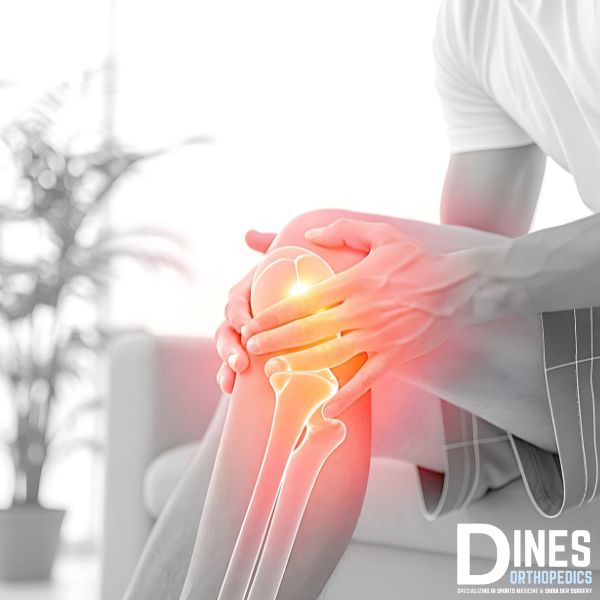
A person sitting and holding their knee in pain, with an illustration highlighting the knee joint and bones. Logo at bottom right reads "Dines Orthopedics.

1. Rest and Protection
  • Avoid putting weight on your leg

  • Use crutches if recommended

  • Protect the injured ligament with a hinged knee brace

2. Ice and Elevation
  • Ice your knee for 15–20 minutes at a time

  • Reduce swelling and control pain

  • Keep the knee elevated when possible

3. Physical Therapy

A structured physical therapy program will help:

  • Restore range of motion

  • Strengthen the muscles around your knee

  • Improve stability

  • Retrain proper movement patterns

Therapists focus on the ligaments of the knee, ensuring the joint remains stable as the LCL heals.

4. Anti-inflammatory Treatment
  • NSAIDs may be recommended to reduce pain and swelling

Most patients begin to see improvement within a few weeks, though full recovery can take 6–8 weeks depending on the injury.


Surgical Treatment for Severe LCL Tears (Grade 3)

If the lateral collateral ligament is completely torn, if there is significant knee instability, or if additional ligaments are damaged, surgery may be necessary.

LCL Reconstruction or Repair

Surgery may involve:

  • Repairing the torn ligament when possible

  • Reconstructing the ligament using a graft when repair is not feasible

This procedure helps restore the normal function of the LCL and stabilizes the knee joint.

Post-Surgical Recovery

After surgery, patients typically:

  • Use a hinged knee brace

  • Limit weight-bearing initially

  • Begin guided physical therapy for strength and mobility

  • Progressively return to full activity under orthopedic supervision

Full recovery may take several months, but surgical outcomes are highly successful with proper rehab.

When to See a Sports Medicine Specialist

If you experience:

  • Persistent knee pain on the outside of the knee

  • Ongoing swelling

  • Instability or “giving way”

  • Difficulty walking or bending the knee

  • Pain after a twisting injury

…it’s important to have your knee evaluated by an experienced orthopedic team.


Expert LCL Injury Care at Dines Orthopedics

The orthopedic and sports medicine specialists at Dines Orthopedics diagnose and treat all types of collateral ligament injuries, from mild LCL sprains to complete tears requiring reconstruction. With advanced diagnostics, personalized treatment plans, and state-of-the-art care, we help patients return to activity safely and confidently.

Comments are closed.